
China Unveils Autonomous Mobile Toilet Robot for Elderly Care
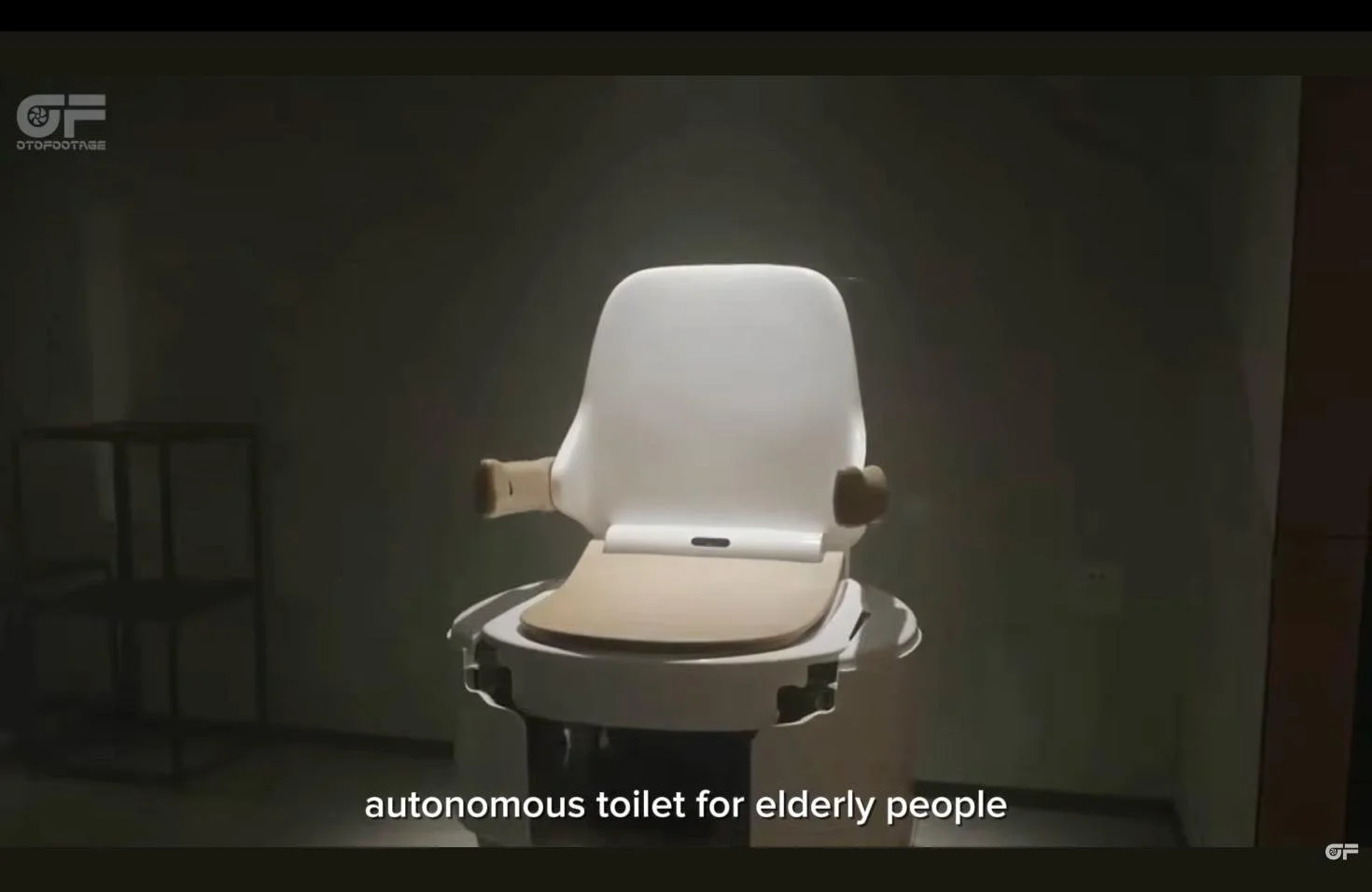
China has unveiled an autonomous mobile toilet robot designed to improve independence for elderly and mobility-impaired users while reducing caregivers’ workloads. (Screen shot of OTOFOOTAGE YouTube Video)
A Chinese technology company has unveiled what it describes as a new generation of assistive robotics: an autonomous mobile toilet designed to help older people and those with limited mobility maintain greater independence and dignity in their daily lives.
Developed by technology firm Yueban, the Xiaoban toilet robot was recently showcased at an elderly care and rehabilitation exhibition in Shanghai. The device is designed to travel autonomously to a user, provide automated personal hygiene, dispose of waste and return to its docking station without requiring caregivers to handle the process manually.
The launch comes as aging societies increasingly explore robotics and artificial intelligence to address rising demand for long-term care. For people who cannot easily reach conventional bathrooms because of age, injury or chronic illness, the Xiaoban takes a fundamentally different approach: bringing the toilet to the user.
Technology Designed to Come to the User
The Xiaoban combines autonomous navigation technology with a full personal-care system. Its navigation platform uses LiDAR, laser and ultrasonic sensors to map indoor environments, identify obstacles and calculate safe routes.
The system is designed to operate in homes and care facilities, with sensors capable of detecting potential hazards such as uneven surfaces and steps. Users can summon the robot through voice commands or a remote control, allowing it to travel to a designated location without requiring someone to push or carry it.
While users with severe mobility limitations may still need assistance transferring onto the device, the robot is designed to automate much of what follows. Its autonomous functions are intended to reduce both physical dependence and the amount of routine intervention required from caregivers.
From Personal Hygiene to Automated Waste Disposal
The Xiaoban is designed to handle both liquid and solid waste, functioning as more than a conventional portable toilet.
After use, an integrated bidet system provides automated washing, followed by warm-air drying. The process is designed to reduce or potentially eliminate the need for toilet paper while providing a more consistent hygiene routine.
Odor control is another key feature. The device incorporates sealed waste-storage compartments and odor-neutralization technology designed to contain smells immediately. Ultraviolet (UV) sanitization is also used to disinfect internal surfaces, addressing hygiene concerns associated with placing a toilet in a bedroom or other living space.
For caregivers, the most significant innovation may come after the user has finished. The Xiaoban can autonomously return to its docking area or align with a conventional household toilet. A robotic disposal arm then transfers the waste into the plumbing system.
During disposal, the waste is pulverized to help prevent blockages. The robot subsequently performs a self-cleaning cycle, sanitizes the bowl and replenishes its clean-water supply through the household water line.
A Potential Shift in Long-Term Care
By automating waste handling and cleaning, the system aims to make the caregiving process more contactless. This could allow caregivers to spend less time on physically demanding and unpleasant tasks and more time providing emotional support, mobility assistance and other forms of care.
The technology also reflects a broader shift in elderly care, where robotics are increasingly being developed not simply to replace human workers but to support independence and reduce the burden of routine care.
However, affordability remains a significant barrier. Reported prices for the Xiaoban vary considerably, with some reports putting the cost at around $4,000 (28,999 yuan), while others cite a launch price closer to $13,000.
As autonomous navigation, sensors and robotic components become more affordable, products such as the Xiaoban could gain wider adoption in residential and institutional care. By potentially reducing the need for bathroom modifications while addressing one of the most sensitive aspects of personal care, the mobile toilet points to a future in which technology plays a larger role in preserving dignity for aging and mobility-impaired populations.
Source: Moneycontrol News, The Verge, OTOFOOTAGE
🚀 Connect with Global Leaders in Aging & Care Innovation!
Sourcingcares links international partners in aging care, long-term care, and health technology, fostering collaboration and driving solutions for a changing world. Our initiatives include Cares Expo Taipei, where the future of elder care takes shape!
🔗 Follow us for insights & opportunities:
📌 Facebook: sourcingcares
📌 LinkedIn: sourcingcares
📍 Explore more at Cares Expo Taipei!
