
From "Kaigo" Robots to AI Sensors: Inside Japan’s Blueprint for Future-Oriented Nursing
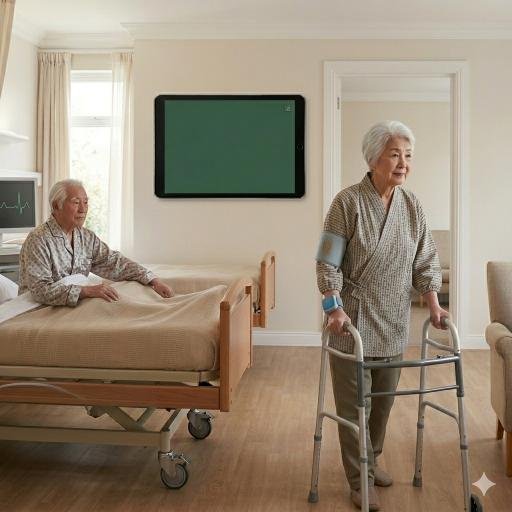
Japan is tackling a 1.55-million-worker shortage by investing 34.79 trillion yen into "smart care" for fiscal 2026.
As Japan approaches 2040—the year its demographic aging is expected to peak—the nation is aggressively pivoting toward a technology-driven "smart care" model to sustain its healthcare infrastructure. Faced with a staggering projected shortfall of 1.55 million care workers within the next two decades, the Japanese government is moving beyond traditional human-centric labor toward a sophisticated integration of robotics and Artificial Intelligence (AI).
A Record Budget for a Digital Shift
To fund this transition, the Japanese Health, Labor, and Welfare Ministry has requested a record 34.79 trillion yen for the fiscal 2026 general-account budget. This 1.4% increase from the previous year is largely driven by soaring social welfare costs associated with the aging population. Within this request, 16.2 billion yen is earmarked specifically for digital transformation (DX) initiatives in medical and nursing care, while another 80.6 billion yen will be used to bolster medical services ahead of the 2040 demographic peak.
Blueprints for the Future: Santa Fe Garden Hills
At the forefront of this evolution is Santa Fe Garden Hills in Tokyo, a facility that serves as a global benchmark for future-oriented care. Here, the integration of the Internet of Things (IoT) and AI has fundamentally altered daily operations:
Continuous Monitoring: "Sleep Scan" devices under mattresses monitor heart rates, breathing, and sleep patterns.
Data Integration: This information feeds into "Nemuri CONNECT" to help create hyper-personalized care plans.
AI-Enhanced Safety: "HitomeQ Care Support" uses ceiling-mounted infrared cameras and AI to analyze resident movements and detect falls in real time.
Biological Tracking: The "DFree" wearable ultrasound device monitors urine volume in the bladder to assist with bathroom timing.
These technologies have significantly lightened the load for staff, who previously walked over 20,000 steps a day. Caregivers now respond primarily to "warning signals" on smartphones and tablets, reducing both physical and mental fatigue while ensuring residents' sleep is not needlessly disturbed.
The Rise of "Kaigo" Robots
A centerpiece of this shift is the "Hug" mobility-assistance robot. Designed to allow a single worker to perform lifting and moving tasks that once required two strong staff members, the robot provides firm support for residents moving to the bathroom while allowing the caregiver to check the resident's complexion.
The government has championed these "kaigo" (care) robots since 2012, designating priority areas for development and offering substantial financial incentives. Currently, subsidies cover between 50% and 75% of the purchase expense for designated care robots.
Investing in Human Capital
Japan recognizes that hardware alone is insufficient. To bridge the gap, the private sector has established certification programs for "smart care workers," training approximately 12,000 individuals to effectively manage and integrate these tools. As Facility Director Tatsuya Toyama explains, the goal isn't just to make staff comfortable, but to improve the quality of direct care by delegating repetitive, strenuous tasks to machines. While nations like South Korea see only 3.9% of institutions using care robots, Japan’s decades-long commitment to smart care serves as a critical blueprint for an aging world.
Article source: CHOSUNBIZ
🚀 Connect with Global Leaders in Aging & Care Innovation!
Sourcingcares links international partners in aging care, long-term care, and health technology, fostering collaboration and driving solutions for a changing world. Our initiatives includeCares Expo Taipei, where the future of elder care takes shape!
🔗 Follow us for insights & opportunities:
📌 Facebook: sourcingcares
📌 LinkedIn: sourcingcares
📍 Explore more at Cares Expo Taipei!
