
America’s First ‘Dementia Village’ Set to Open
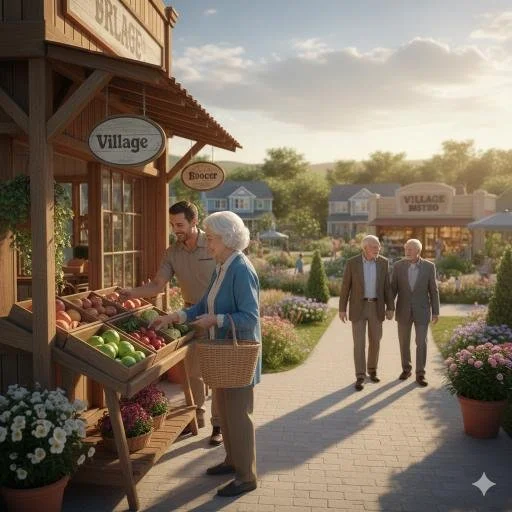
America’s first ‘dementia village’ set to open in Fitchburg, Wisconsin.
In a bold departure from the clinical atmosphere of traditional nursing homes, the United States is preparing to launch its first purpose-built dementia village, according to WMTV 15 News report.
Led by the organization Agrace, this $40 million development aims to redefine elderly care by prioritizing dignity, independence, and a sense of normalcy for those living with cognitive decline.
A Neighborhood, Not a Facility
Located on Agrace’s Fitchburg campus near Madison, Wisconsin, construction is slated to begin this year, with a projected opening in September 2027. The village will house up to 65 residents across eight home-style residences. Each house will accommodate approximately eight individuals, providing private bedrooms alongside shared kitchens and living spaces to foster a communal atmosphere.
To mirror the rhythms of everyday life, the secure campus will feature a grocery store, restaurant, cinema, and expansive green spaces. Residents will be encouraged to move freely within the perimeter, allowing them to perform daily errands or attend film screenings in a safe, familiar environment.
The Dutch Blueprint: The Hogeweyk®
The Wisconsin project draws direct inspiration from The Hogeweyk® in the Netherlands. Since its 2009 debut, The Hogeweyk® has revolutionized memory care. While often labeled a "dementia village," its founders at Be Advice prefer the term inclusive community, emphasizing the person over the pathology. Today, The Hogeweyk® supports 188 residents across 27 houses.
Authenticity vs. Artifice
The founders are quick to dismiss comparisons to The Truman Show. There are no actors; instead, 200 full-time equivalent staff members—including nurses and doctors—wear civilian clothes to maintain a "real-world" feel. The streets, squares, and supermarkets are functional spaces where residents perform genuine daily tasks, a social approach proven to support active aging and autonomy.
Meeting a Rising National Demand
This model arrives at a pivotal moment. With over six million Americans currently living with dementia—a figure expected to double by 2060—Agrace views the village-style community as a humane alternative to fragmented care. To ensure accessibility, Agrace intends to keep monthly fees comparable to standard assisted living, utilizing a sliding fee scale and an endowment fund.
While the project is not a cure, it offers a vital blueprint for the future: replacing locked wards with open streets and shared routines.
Article source: WMTV 15 News, be advice
🚀 Connect with Global Leaders in Aging & Care Innovation!
Sourcingcares links international partners in aging care, long-term care, and health technology, fostering collaboration and driving solutions for a changing world. Our initiatives include Cares Expo Taipei, where the future of elder care takes shape!
🔗 Follow us for insights & opportunities:
📌 Facebook: sourcingcares
📌 LinkedIn: sourcingcares
📍 Explore more at Cares Expo Taipei!