
Claude Steps Into Healthcare, Putting Anthropic in Direct Competition With OpenAI’s ChatGPT Health
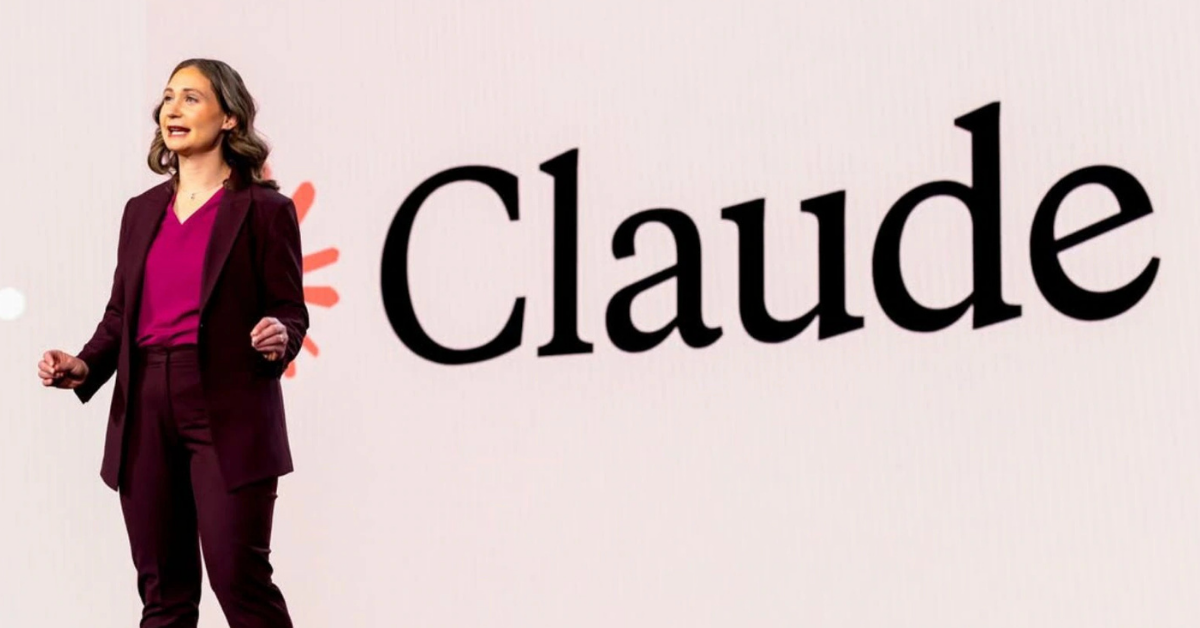
Anthropic and OpenAI have launched competing AI platforms that integrate patient records and insurance workflows, aiming to cut the U.S. healthcare system’s $496 billion administrative burden while accelerating prior authorization and clinical processes. (Source: Instagram)
Strategic Market Entry: The Healthcare AI Acceleration
Anthropic announced Claude for Healthcare on January 11, 2026, introducing a comprehensive suite of tools for providers, payers, and patients just days after rival OpenAI launched ChatGPT Health. This rapid deployment marks a fundamental transformation in enterprise AI strategy: the evolution from general-purpose chatbots to specialized platforms integrating personal medical records with insurance documentation to navigate increasingly complex health systems.
The global AI in healthcare market reached $29.01 billion in 2024 and is projected to surge to $504.17 billion by 2032, representing a compound annual growth rate of 44%. This explosive trajectory is driven by healthcare's critical need to address systemic inefficiencies while improving patient outcomes.
The Administrative Crisis Driving AI Adoption
Healthcare administrative costs in the United States alone account for approximately 40% of total expenditures, with billing and insurance-related activities consuming $496 billion annually. This burden extends far beyond financial metrics, fundamentally compromising care delivery and clinician wellbeing.
The Prior Authorization Crisis
Prior authorization exemplifies healthcare's administrative dysfunction. Physicians spend 13 hours weekly completing 39 prior authorizations, with industry-wide costs reaching $1.3 billion in 2023—a 30% annual increase. The human toll is severe: 93% of physicians report care delays, 89% cite significant burnout contributions, and one-third have witnessed authorization delays lead to serious adverse patient events.
Claude for Healthcare: HIPAA-Compliant Enterprise Infrastructure
Anthropic's platform delivers HIPAA-ready products enabling healthcare providers, payers, and consumers to deploy AI workflows involving protected health information for the first time at enterprise scale. Powered by Claude Opus 4.5, the system demonstrates enhanced stability and reduced factual errors in simulated medical and scientific tasks.
Critical Database Integration
Claude for Healthcare connects directly to essential medical databases including CMS Coverage, ICD-10 coding, National Provider Identifier Registry, and PubMed— eliminating manual cross-system verification during prior authorization and claims processing.
These integrations eliminate manual cross-system verification, enabling instant access to policy documentation, coding standards, and medical literature during critical workflows like prior authorization reviews and claims processing.
Agent Skills for Workflow Automation
Anthropic introduced two foundational Agent Skills: FHIR (Fast Healthcare Interoperability Resources) development and prior authorization review capabilities. The FHIR skill accelerates healthcare system integration with reduced errors, while the prior authorization skill provides customizable templates enabling automated cross-referencing between coverage requirements, clinical guidelines, patient records, and appeal documentation—addressing workflows that currently require hours of manual review.
Life Sciences Expansion
Claude for Life Sciences connects to Medidata, ClinicalTrials.gov, bioRxiv, medRxiv, Open Targets, and ChEMBL databases. These capabilities support workflows from drafting FDA and NIH-compliant clinical trial protocols to monitoring trial performance and preparing regulatory submissions.
Consumer Health Integration: Personal Medical Navigation
U.S. subscribers to Claude Pro and Max plans can grant Claude secure access to lab results and health records through integrations with HealthEx and Function Health, with Apple Health and Android Health Connect capabilities rolling out via mobile applications.
When connected, Claude summarizes medical history, explains test results in accessible language, detects patterns across health metrics, and prepares structured question lists for appointments, transforming patient-physician interactions by ensuring patients arrive informed and prepared.
Privacy Architecture: Health data is excluded from model memory and never used for training. Users maintain explicit control through granular permission management and instant disconnection capabilities. Anthropic mandates qualified professional review of AI-generated outputs before implementation in high-risk healthcare decisions.
Competitive Positioning: OpenAI vs. Anthropic
While ChatGPT Health emphasizes patient-facing chat experiences, Anthropic's architecture promises deeper enterprise sophistication through agent skills and connectors providing AI access to platforms that accelerate research processes and report generation for payers and providers.
OpenAI acquired Torch, a healthcare startup specializing in medical memory technology, for approximately $100 million just days after ChatGPT Health's launch, demonstrating urgency in building competitive healthcare moats. AI investment in healthcare exceeded $18 billion in 2025, with AI healthcare companies representing 46% of total spending.
Global Market Dynamics and Regional Adoption
North America Leadership: North America dominated the market with 49.29% share in 2024, driven by advanced healthcare infrastructure, high technology integration, and regulatory support for AI adoption. The U.S. market expanded from $11.8 billion in 2023 with projections to reach $102.2 billion by 2030.
Asia-Pacific Acceleration: Asia-Pacific experiences rapid growth driven by demographic shifts, government healthcare innovation investment, and expanding private sector participation. India demonstrates particular momentum—in February 2025, Koninklijke Philips partnered with Medtronic to train 300+ clinicians in advanced imaging techniques for structural heart diseases.
European Strategic Initiatives: France's National Strategy on Data and Artificial Intelligence in Healthcare (2025-2028) aims to build infrastructure while ensuring European retention of digital healthcare sovereignty. Germany actively supports digitization through comprehensive healthcare AI strategies.
Industry Outlook: Transformation Accelerates
According to NVIDIA's State of AI in Healthcare report, 86% of respondents said AI is critical to their future, and 83% believe AI will revolutionize healthcare and life sciences within three to five years.
Industry experts emphasize that innovation will come from AI trained on real-world domain expertise rather than generic models, enabling error prevention, smooth claims processing, and more predictable financial performance. The smartest organizational strategy involves partnering with specialized organizations possessing both advanced technology and proven playbooks for navigating healthcare complexity at scale.
Conclusion: From Tools to Infrastructure
Both Anthropic and OpenAI emphasize that healthcare AI platforms augment rather than replace professional judgment. As systems worldwide confront mounting administrative burdens, clinician burnout, and access challenges, AI platforms capable of navigating complex health systems and automating routine workflows represent critical infrastructure evolution.
🚀 Connect with Global Leaders in Aging & Care Innovation!
Sourcingcares links international partners in aging care, long-term care, and health technology, fostering collaboration and driving solutions for a changing world. Our initiatives include Cares Expo Taipei, where the future of elder care takes shape!
🔗 Follow us for insights & opportunities:
📌 Facebook: sourcingcares
📌 LinkedIn: sourcingcares
📍 Explore more at Cares Expo Taipei!
Source: Anthropic
