
The Rise of Privacy-First Radar Monitoring for Senior Safety
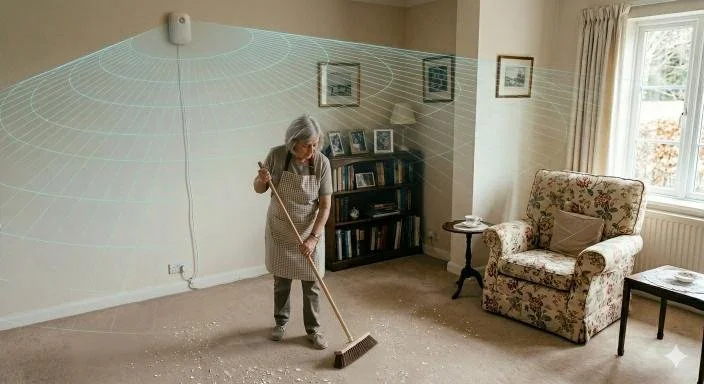
Advanced radar technology is revolutionizing senior care by providing non-intrusive fall prevention, vital sign monitoring, and rapid emergency alerts while preserving user privacy and dignity, as evidenced by recent life-saving successes in Arizona and California. (Stock Photo)
A quiet revolution is taking place in the bedrooms and living spaces of senior citizens across the country. For decades, the choice for families concerned about aging loved ones was a difficult one: either install intrusive video cameras that strip away a senior's dignity or rely on wearable pendants that are often forgotten or refused. Advanced radar technology, utilizing radio waves similar to Wi-Fi, is now providing 24/7 safety monitoring and vital sign detection without ever recording a single image or audio clip.
This "ambient sensing" technology is transforming how we manage fall prevention, sleep quality, and chronic health conditions. Unlike traditional systems, radar sensors are pocket-sized devices—often resembling smoke detectors—that can "see" through the dark and detect tiny movements, such as the rise and fall of a chest during breathing. By leveraging artificial intelligence to analyze these motion patterns, radar is now saving lives in two major recent deployments.
Case Study 1: The Arizona "Oasis" – A 65% Reduction in Falls
In Surprise, Arizona, the Oasis at Fellowship Square senior living community recently implemented a radar-based system developed by Phoenix-based company Helpany. The results were immediate and dramatic. Within the first 30 days of installing these sensors in all 329 independent and assisted living rooms, the facility reported a 65% reduction in falls.
The system works by using AI to analyze a resident’s gait, posture, and stride length. Alicia Juarez, the director of Fellowship Square Surprise, noted that the technology allows staff to proactively respond to residents before an injury occurs. For example, if the radar detects that a resident is stumbling or has spent an unusual amount of time in the bathroom—a high-risk area for falls—the system sends an alert to healthcare providers.
For 85-year-old resident Shirley Gillespie, the technology has removed the constant anxiety of living alone. “You feel more secure,” Gillespie said. “The fear is gone, because you know you are going to get help.” Juarez adds that families prefer this "wonderful alternative" because it eliminates the need to "stare at a camera all day" to ensure their parents are safe.
Case Study 2: Silver Shield and the "Golden Hour" in California
Further west in North County, San Diego, a new radar-based device called Silver Shield is being deployed to tackle the critical window of time following an emergency. Developed by Pontosense and distributed by Executive Home Care, Silver Shield is designed to detect falls and alert family members via SMS within seconds.
Gil Flores, a firefighter and co-owner of Executive Home Care North County, emphasizes that the speed of the alert is a life-saving factor. “The physical reality is that health deteriorates over time,” Flores explained, noting that secondary complications like dehydration, internal bleeding, and hypothermia can be more dangerous than the fall itself if a senior is left on the floor for hours.
Silver Shield’s radar is sophisticated enough to distinguish between humans and pets, significantly reducing the false alarms that often plague traditional motion sensors. Furthermore, because the system requires no wearable pendants, seniors can move naturally through their homes without the burden of intrusive equipment.
Beyond Safety: Monitoring Vitals and Sleep
While fall detection is the most immediate benefit, radar’s ability to monitor health at a clinical level is its most promising frontier. Dr. Jae-Eun Lee, CEO of bitsensing, explains that 60GHz radar can detect tiny movements like breathing and heart rate with accuracy comparable to a traditional clinical sleep test (polysomnography).
This allows medical staff to identify serious issues such as sleep apnea, irregular breathing, or Chronic Obstructive Pulmonary Disease (COPD) before they become emergencies. By tracking "motion-related" data like tossing and turning or frequent nighttime bathroom visits, the AI can create a comprehensive health report for each resident, identifying underlying problems that might otherwise go unnoticed.
The Intersection of Safety and Dignity
Perhaps the greatest advantage of radar technology is its commitment to privacy. Because it uses radio waves rather than optical lenses, there are no cameras or microphones involved. This makes it an ideal solution for sensitive areas like bathrooms or bedrooms where seniors most value their privacy.
The technology is also becoming "sleep aware." Radar sensors can integrate with smart home technology to automatically turn off lights and televisions when it detects a senior has fallen asleep, and even adjust air conditioning based on sleep phases.
As these successful cases in Arizona and California demonstrate, radar technology is not just a safety tool; it is a means of preserving independence. By providing a discreet, invisible safety net, radar allows the elderly to live safer, more dignified lives in their own homes for much longer.
Article source: Arizona News, The Coast News Group, HIT Consultant
🚀 Connect with Global Leaders in Aging & Care Innovation!
Sourcingcares links international partners in aging care, long-term care, and health technology, fostering collaboration and driving solutions for a changing world. Our initiatives include Cares Expo Taipei, where the future of elder care takes shape!
🔗 Follow us for insights & opportunities:
📌 Facebook: sourcingcares
📌 LinkedIn: sourcingcares
📍 Explore more at Cares Expo Taipei!
