
South Korea Moves AI Care From Pilots to Scale
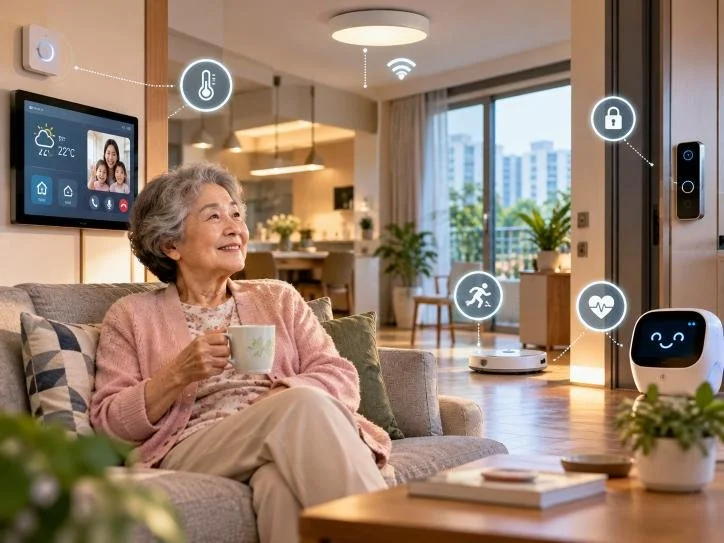
South Korea is moving AI care from pilots toward scale, linking smart homes and facilities with real-world testing and potential reimbursement. (Stock Photo)
South Korea is moving to make artificial intelligence part of everyday care, with a new national roadmap linking AI smart homes and care facilities to real-world trials, government funding, and potentially long-term care reimbursement.
On October 6, the Ministry of Health and Welfare unveiled its Welfare and Care AI Transformation Roadmap, designed partly to address growing care demand and anticipated workforce shortages. Rather than focusing on individual devices, the plan seeks to create environments where AI, sensors and eventually care robots work together to support older people and care workers.
From Emergency Alerts to AI Smart Homes
For older people receiving care at home, Korea wants to move beyond conventional emergency systems that rely largely on motion detection and emergency buttons.
Under the proposed smart-home model, AI will combine information about daily activities and health to identify unusual changes earlier. The government envisions 24-hour support covering safety, health and emotional wellbeing, eventually including autonomous home robots capable of companionship, safety monitoring and health management after 2030.
Some of this model is already being tested.
In September, Gyeonggi Province began an AI smart-home care project in 200 households in Seongnam, targeting older people, long-term care recipients and people with chronic conditions. The project is part of the national AX-Sprint programme, designed to test near-commercial AI products in actual care settings before wider deployment.
Participants can receive AI speakers, activity sensors, companion robots, smartwatches and blood-pressure monitors. The integrated system is intended to provide continuous safety, health and emotional support while allowing older people to remain at home. The pilot runs through December 2027 and involves a consortium of 12 companies, including NHN.
Smart Facilities Target Caregiver Workload
AI adoption is also moving into institutional care.
The government's roadmap proposes replacing some routine nighttime rounds—currently involving checks on safety, sleep and toileting—with technologies such as smart diapers and fall sensors that can immediately flag abnormalities. In 2027, Korea plans to develop and validate smart-home and smart-facility models across 400 households and 12 facilities, followed by expansion through public care services from 2028.
Smaller facility-level projects are already underway. The Seoul Welfare Foundation selected six care organisations in May for its 2026 Digital Transformation Support Project. Their projects address practical care problems including AI-based fall monitoring, pressure-ulcer prevention, repositioning, transfer assistance and toileting care.
Building a Route From Testing to Reimbursement
What makes Korea's strategy particularly significant for technology suppliers is what happens after a successful pilot.
The government plans to use data generated by smart homes and facilities to improve technologies, return those technologies to care settings for further testing, and connect solutions shown to be effective with mechanisms such as fast-track listing as long-term care welfare equipment, facility reimbursement and vouchers. R&D investment will also expand from AI and IoT care technologies during 2027–2029 toward physical AI and care robots during 2028–2030.
Korea is therefore attempting to build a complete care-technology pathway: develop, test in real care environments, measure effectiveness, establish payment support and scale adoption.
For the eldercare technology industry, that could prove more consequential than any single AI device. The critical test will be whether Korea can turn promising pilots into technologies that care providers can afford, workers will use, and the long-term care system can sustainably reimburse.
🚀 Connect with Global Leaders in Aging & Care Innovation!
Sourcingcares links international partners in aging care, long-term care, and health technology, fostering collaboration and driving solutions for a changing world. Our initiatives include Cares Expo Taipei, where the future of elder care takes shape!
🔗 Follow us for insights & opportunities:
📌 Facebook: sourcingcares
📌 LinkedIn: sourcingcares
📍 Explore more at Cares Expo Taipei!
