
Samsung Transforms Smart Home into "Caregiving Command Center"
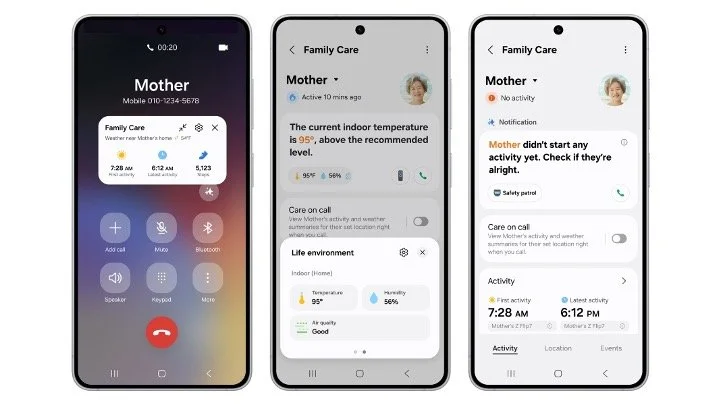
Samsung is transforming its SmartThings platform into an AI-powered elder care "command center" by repurposing household appliances to provide families with remote monitoring and peace of mind. (Photo credit: Samsung)
Samsung is fundamentally redefining the role of the smart home, moving beyond simple automation to position its SmartThings platform as a comprehensive, AI-powered "remote caregiving command center." According to recent reports, the company’s latest update signals a major strategic pivot from selling standalone devices to offering a "stickier" value proposition: peace of mind for families caring for elderly relatives. By weaving elder care features directly into the fabric of everyday household appliances, Samsung aims to reduce the cognitive and emotional labor associated with remote caregiving.
Contextual Intelligence: Care on Call
The most visible integration is Care on Call, a feature that blends telecommunications with real-time home telemetry. Designed for caregivers using Galaxy smartphones running One UI 8.5 or later, this tool intercepts outgoing calls to elderly family members with a "pre-call intelligence briefing." Before the caregiver even hears a dial tone, a pop-up on their screen displays critical status updates: when the recipient first moved that morning, their most recent activity level, and the local weather at their home. This integration ensures that caregivers have a clear "briefing" on their loved one's status before the conversation starts, allowing for more informed and less anxious interactions.
The Roving Guardian: Safety Patrol
Samsung is also repurposing its robotics division to serve as a mobile safety net. The Safety Patrol feature, part of the updated Family Care service, conscripts the Bespoke AI Jet Bot Steam Ultra robot vacuum into a surveillance role. If the SmartThings platform—acting as a distributed monitoring network—detects a prolonged lack of movement from the care recipient, it triggers an automatic alert to the caregiver.
The caregiver can then remotely pilot the vacuum’s built-in camera through the house to perform a visual check. The integration goes further by utilizing the vacuum's two-way audio system, enabling the caregiver to communicate immediately if they find the individual has fallen or is in distress. This transforms a cleaning appliance into a proactive security tool that fills the gaps where stationary cameras or sensors might fail.
Predictive Analytics and Environmental Mesh
The platform’s "blending" of data extends to the very air in the home. SmartThings now aggregates continuous data from air conditioners, purifiers, dehumidifiers, and humidifiers to monitor the living environment. This environmental mesh is programmed to recognize dangerous anomalies—such as a heat wave occurring while the air conditioning remains inactive—and will immediately notify caregivers with remote-control options to adjust the settings.
Complementing this is Care Insight, a feature that utilizes long-term pattern recognition. By analyzing week-over-week changes in device usage and movement, the AI flags significant deviations that might indicate a gradual decline in health or a change in daily habits. This provides families with a systematic way to track behavioral data that would otherwise go unnoticed.
Ambient Awareness via Now Brief
To ensure this data is accessible without tethering caregivers to their phones, Samsung is expanding its Now Brief AI assistant to 2024 and newer TVs and Family Hub refrigerators from 2021 onwards. These devices act as ambient displays that activate automatically when a user approaches. For example, a caregiver walking into their own kitchen can glance at the fridge door to see a unified information layer: that their parent was active starting at 7:15 AM, the dog has been walked, and the parent's front door was last opened at a safe hour.
A Full-Stack Strategic Advantage
This ecosystem-wide integration gives Samsung a distinct edge over competitors like Amazon and Google. While Amazon offers the Alexa Together subscription and Google focuses on Nest security, Samsung controls the "entire stack"—from the phone in the caregiver's pocket to the fridge in their kitchen and the vacuum in the parent’s hallway. This allows for a seamless flow of data across different hardware categories that few other companies can match.
As the global smart home market heads toward a projected $174 billion by 2025, Samsung is betting that elder care will be its fastest-growing segment. The phased rollout, beginning alongside the Galaxy S26 launch in 2026, aims to turn the smart home into a "caregiving mesh network" that solves real-world emotional challenges while deepening brand loyalty through essential family services.
Article source: the Tech buzz, and Samsung
🚀 Connect with Global Leaders in Aging & Care Innovation!
Sourcingcares links international partners in aging care, long-term care, and health technology, fostering collaboration and driving solutions for a changing world. Our initiatives include Cares Expo Taipei, where the future of elder care takes shape!
🔗 Follow us for insights & opportunities:
📌 Facebook: sourcingcares
📌 LinkedIn: sourcingcares
📍 Explore more at Cares Expo Taipei!
