
Japan’s Billion-Dollar Shift to Indian Healthcare
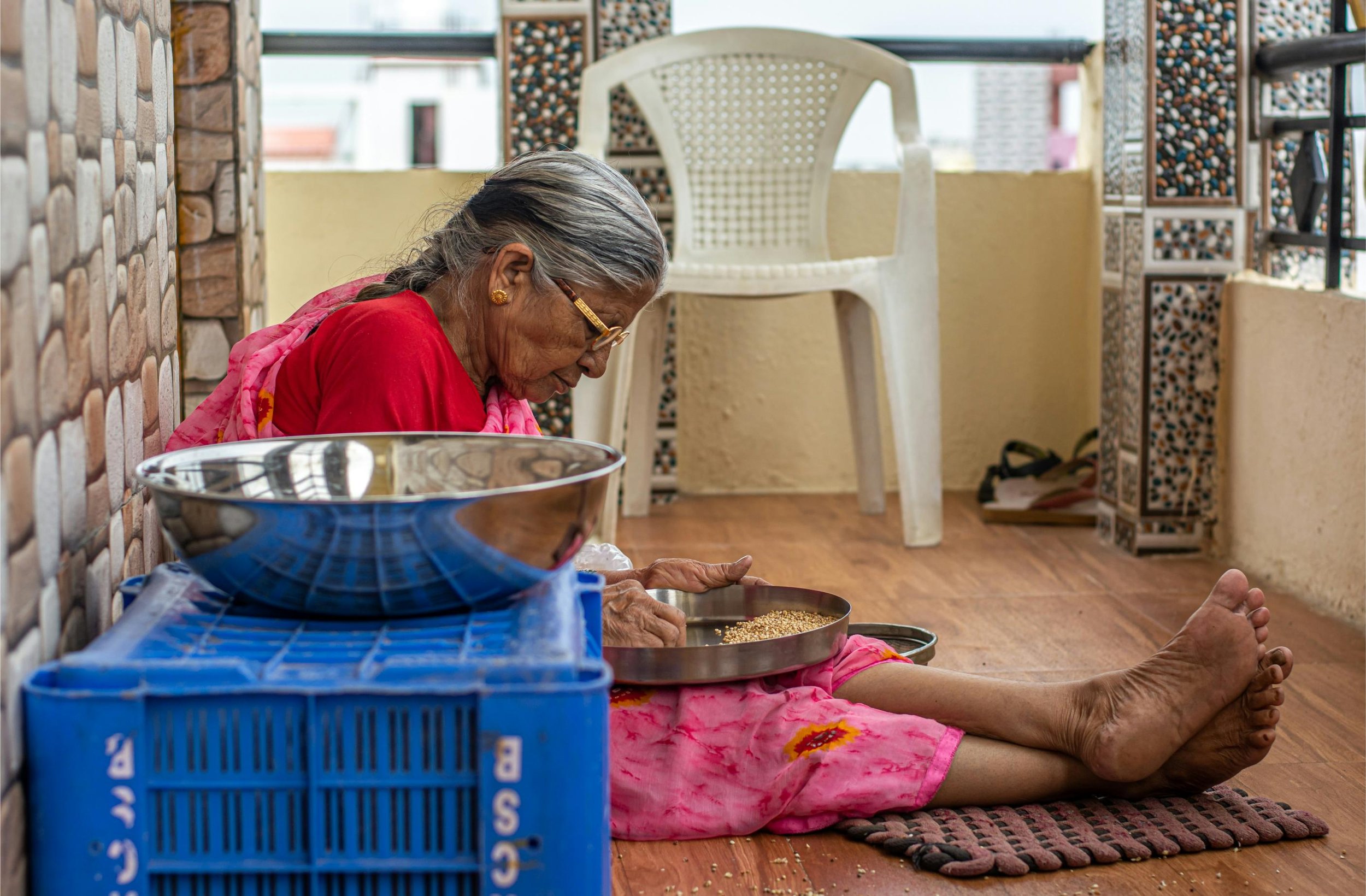
Japanese companies are modernizing Indian healthcare by investing in medical technology, local manufacturing, digital innovation, and community-based elderly care models. (Photo courtesy of Unsplash)
A quiet but profound transformation is unfolding across the landscape of Indian medicine. Driven by a unique alignment of geopolitical goodwill, macroeconomic shifts, and complementary demographic needs, India and Japan have forged a powerful partnership in the fields of medical technology (MedTech), elderly care, and healthcare infrastructure.
What began decades ago as a relationship centered primarily on heavy machinery, automotive plants, and transport systems has evolved into a sophisticated, high-tech alliance focused on human health. Today, Japan's top corporations are aggressively expanding their presence in the Indian market. Moving beyond a traditional "import-and-sell" strategy, these companies are embedding themselves into India’s domestic fabric through localized manufacturing, advanced software integration, and the introduction of structural healthcare models designed to modernize patient care from urban corporate hospitals to isolated rural communities.
The Bilateral Synergy: A Perfect Demographic Handshake
At the heart of this expanding relationship is a perfect symbiotic match between two distinct demographic realities. Japan stands as the world’s most advanced super-aging society, with roughly 28% of its citizens aged 65 or older. Decades of managing this graying population have forced Japanese researchers and medical companies to pioneer highly advanced diagnostic tools, minimally invasive surgical hardware, and beautifully optimized systems of continuous elderly care. However, Japan’s domestic market is heavily saturated and shrinking, creating an urgent commercial need for Japanese enterprises to find fresh, high-growth global territories.
India offers the ideal counterweight. Boasting an unmatched demographic dividend of 1.4 billion citizens, India is simultaneously experiencing a massive economic expansion. Its healthcare market is projected to skyrocket to $320 billion by 2028. Yet, as urbanization deepens and life expectancy rises, India faces a dual challenge: it must combat an escalating wave of chronic, non-communicable lifestyle diseases—such as diabetes, cardiovascular conditions, and cancers—while concurrently bridging a severe healthcare divide between its hyper-modern tier-1 cities and underserved rural hinterlands.
By opening its borders to Japanese capital and technological frameworks, India gains immediate access to the tools required to leapfrog transitional developmental phases and build an efficient, digital-first medical network. Japan, in turn, secures long-term positioning within the fastest-growing healthcare market on earth, backed by a massive pool of local engineering talent capable of co-developing next-generation software solutions.
Corporate Proliferation and Capital Infusion
The momentum behind this healthcare diplomacy is reflected in rapid corporate expansion. Recent business surveys reveal that an overwhelming 81% of Japanese corporations prioritize long-term expansion within India, viewing it as a critical pillar of supply chain resilience under the global "China+1" strategy. Currently, 27 major Japanese healthcare organizations maintain deep industrial footprints in India, strategically split between 17 purely commercial ventures and 10 state-of-the-art manufacturing establishments.
This wave of expansion is exceptionally well-capitalized. Following high-level diplomatic agreements, the bilateral investment target has been scaled to an unprecedented JPY 10 trillion in private sector investments. Backed by joint sovereign-backed investment vehicles and financial conglomerates like Nomura Holdings, Japanese capital is steadily flowing into high-potential Indian pharmaceutical firms and medical developers.
Operationally, legendary Japanese conglomerates are leading the charge across specialized medical verticals. Fujifilm India is building specialized diagnostic health-screening centers across urban centers, focusing on early detection through artificial intelligence, while Omron Healthcare has standardized high-precision digital blood pressure monitors and respiratory equipment to track chronic conditions. Concurrently, Olympus Corporation has institutionalized advanced endoscopic and minimally invasive surgical tools across top-tier Indian medical centers, utilizing its specialized Research and Development hub in Hyderabad to co-develop the future of endoscopic visualization alongside local engineers.
The Shift to Local Manufacturing: Groundwork for Affordable Care
For Japanese medical solutions to truly modernize Indian healthcare, they must be affordable and accessible to the general public. To overcome high import duties and logistical overhead, Japanese firms are aggressively shifting away from overseas shipping models to embrace India's "Make in India" initiatives and Production Linked Incentive (PLI) schemes.
A prime example of this collaborative industrial shift can be observed at the Yamuna Expressway Industrial Development Authority’s (YEIDA) Medical Device Park in Sector 28, Uttar Pradesh. Spanning over 350 acres, this massive global manufacturing hub has drawn significant Japanese interest. Through formal institutional agreements involving Medical Excellence Japan (MEJ) and the Economic Research Institute for ASEAN and East Asia (ERIA), Japanese technology is being infused directly into the development of local factory plots.
By setting up local assembly and research plants within these specialized parks, Japanese corporations are driving down production costs by 30% to 50%. This enables Indian hospitals to acquire complex diagnostic equipment at fractions of traditional import prices, while transforming India into a resilient, high-quality export hub capable of supplying Japanese-engineered medical hardware to developing economies across South Asia, Africa, and the Middle East. Companies like Horiba have committed massive capital investments—such as a multi-billion INR manufacturing facility in Nagpur—to produce top-tier molecular diagnostic instruments and consumables. Simultaneously, Nipro Corporation is scaling up the localized production of advanced dialyzers, directly answering India's critical demand for affordable, high-quality renal care.
Modernizing Eldercare: The Sakra World Hospital Model
Beyond manufacturing physical devices, Japan is introducing an even more precious asset to India: its revolutionary structural concepts of healthcare delivery. As India's aging demographic grows, traditional fragmented hospital systems are struggling to cope with long-term convalescent care.
To solve this, Sakra World Hospital in Bengaluru—a prestigious joint venture between Secom Medical System and Toyota Tsusho—has stepped forward as a living laboratory for Japanese medical management. Operating as the first flagship general hospital on the subcontinent, driven by Japanese operational philosophies, Sakra utilizes over 220 elite clinicians performing roughly a thousand advanced surgical procedures monthly.
Crucially, Sakra has successfully pioneered Japan’s famous "Community-Based Integrated Care System." In standard medical setups, a patient is typically discharged immediately after acute surgery, leaving a dangerous gap between hospital treatment and home recovery. The Japanese integrated care model stitches this ecosystem back together. It maps out a seamless pathway linking acute hospital interventions, specialized post-operative rehabilitation, and continuous, data-driven home nursing services.
Sakra's dedicated physical rehabilitation center showcases this shift, introducing wide-room, transparent configurations where patients engage in group therapy—a methodology centered on collective motivation that was entirely foreign to conventional, isolated Indian therapeutic practices. By extending these protocols to home-care satellite networks, the partnership provides a blueprint for how India can humanely and efficiently manage its upcoming geriatric transition.
The Digital Frontier and Future Horizons
As the collaboration ventures into the future, the ultimate horizon of this bilateral partnership lies in digitalization and artificial intelligence. By feeding advanced Japanese software algorithms with the sheer scale of the Ayushman Bharat Digital Mission (ABDM), the two nations are unlocking entirely new methods of medical outreach.
The real-world power of this digital bundling is vividly clear in rural outreach campaigns. In the mountainous, heavily forested terrains of Kerala, deep near the Bengal Tiger Reserve, Fujifilm has deployed ultra-portable, 3.5-kilogram X-ray machines. These lightweight units operate entirely on battery packs in areas devoid of electrical infrastructure. Equipped with integrated Japanese AI software, the machines scan patients on-the-spot, instantly identifying chest anomalies to diagnose tuberculosis within minutes. This immediate intervention bypasses the need for rural indigenous populations to travel days to urban centers, successfully bringing top-tier diagnostics directly to the rural poor.
Looking forward, Japanese firms are laying expansive future investment blueprints. Plans are underway to establish dedicated Japan-India Medical IT hubs in tier-2 Indian cities, focusing on cloud-based telemetry and remote elderly monitoring systems that will allow Tokyo-based geriatric specialists to support Indian home-care nurses in real-time. Furthermore, the partnership is cementing its longevity through human capital development. Through entities like Terumo India's advanced simulation skill labs, Japanese experts are training thousands of local Indian surgeons in intricate, minimally invasive cardiovascular techniques. Supported by the formalized India-Japan Human Resource Exchange framework—which charts a multi-sector target to mobilize and upskill hundreds of thousands of personnel—this alliance ensures that as India's medical infrastructure physically modernizes, its workforce evolves in tandem. The India-Japan healthcare alliance has transcended basic commerce, establishing a resilient, digital, and deeply integrated ecosystem that promises to redefine medical care for generations to come.
Source: Corpradar.org, investmentguruindia.com, Japan Forward Association Inc.
🚀 Connect with Global Leaders in Aging & Care Innovation!
Sourcingcares links international partners in aging care, long-term care, and health technology, fostering collaboration and driving solutions for a changing world. Our initiatives include Cares Expo Taipei, where the future of elder care takes shape!
🔗 Follow us for insights & opportunities:
📌 Facebook: sourcingcares
📌 LinkedIn: sourcingcares
📍 Explore more at Cares Expo Taipei!
