
From Safety Monitoring to Intelligent Care: How a Taiwanese Long-Term Care Facility Is Operationalizing AI

「The real value of AI in care lies in its ability to turn fragmented signals into timely, actionable insight for frontline teams.」— Noah Sang, Director of Taipei Noble Healthcare Center.
This article is an English translation of our Chinese media interview published by Anke Care, featuring Noah Sang, Director of Taipei Noble Healthcare Center.
Across long-term care facilities worldwide, artificial intelligence and connected sensors are incrementally changing how caregivers identify risks and allocate attention. Rather than replacing human care, these technologies are increasingly positioned as decision-support systems—designed to surface risks earlier and reduce the cognitive load on frontline staff.
At Taipei Noble Healthcare Center, this transition has moved beyond pilot projects into daily operations. Under the direction of the Director of Taipei Noble Healthcare Center, Noah Sang, the facility has built an integrated system of sensors and care technologies that monitor everything from fall risk and sleep patterns to bladder health. The result is a facility-wide system that consolidates safety and care intelligence, supporting faster and more informed caregiving decisions.
“Technology should never replace caregivers,” Sang says. “Its role is to help teams identify risks earlier and respond with greater confidence.”
An Operational Framework for Smart Care
Rather than deploying isolated devices, Taipei Noble Healthcare Center organizes its smart care strategy around three interlinked operational domains. Each addresses a core challenge common to institutional elder care.
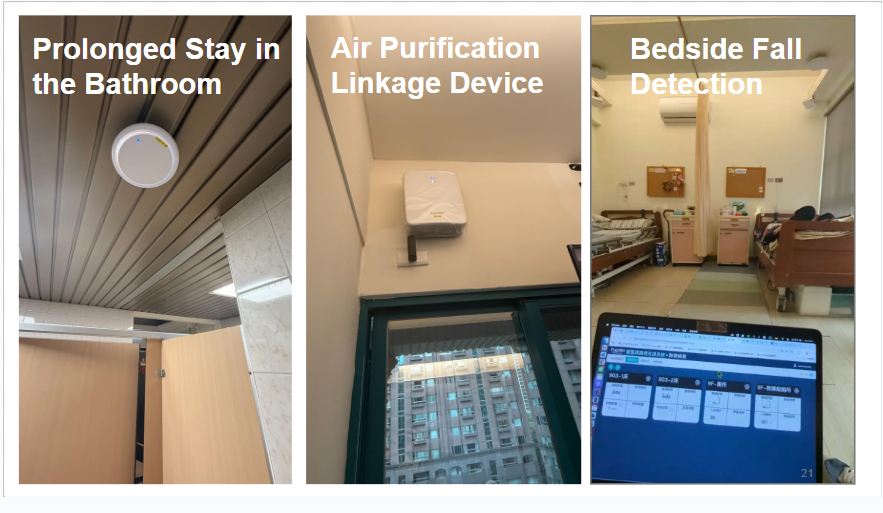
1. Safety Protection: Establishing a Continuous Risk-Awareness Layer
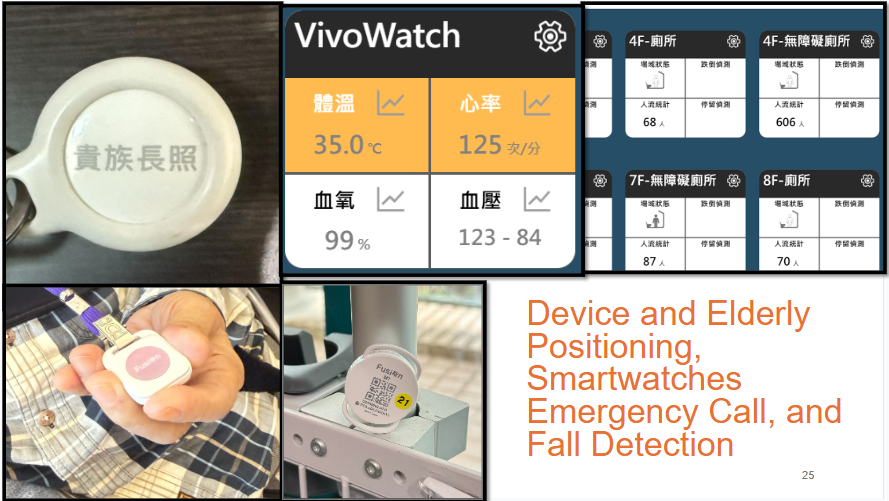
Safety infrastructure forms the foundation of the system. A network of sensors monitors falls, bed exits, bathroom usage patterns, and resident location, with GPS-enabled support for individuals living with cognitive impairment. Wearable emergency call devices allow residents to summon assistance immediately when needed.
Beyond individual safety, environmental monitoring systems track fire hazards, flooding, seismic activity, and extreme weather events. Alerts are simultaneously pushed to staff devices and secure family-facing communication platforms. In predefined emergency scenarios, the system can also support predefined automated or assisted responses, such as activating suppression systems or contacting emergency services.
This infrastructure operates on low-power wide-area networks and Bluetooth mesh connectivity, enabling real-time responsiveness that goes beyond the capabilities of traditional nurse-call systems.
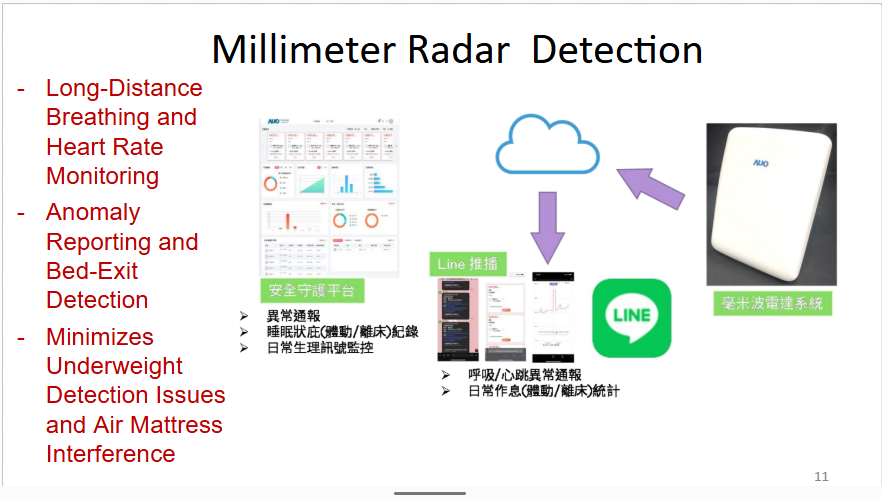
2. Health Monitoring: Passive, Continuous Insight Without Disruption
Health monitoring is designed to be unobtrusive. Smart mattresses, millimeter-wave radar, and wearable sensors passively capture physiological indicators, including respiratory rate, heart rhythm, oxygen saturation, core temperature, blood pressure, and sleep patterns.
Machine learning models analyze these signals over time to detect deviations that may indicate early-stage infection, rising fall risk, or pressure injury development—in some cases, prior to overt clinical symptoms.
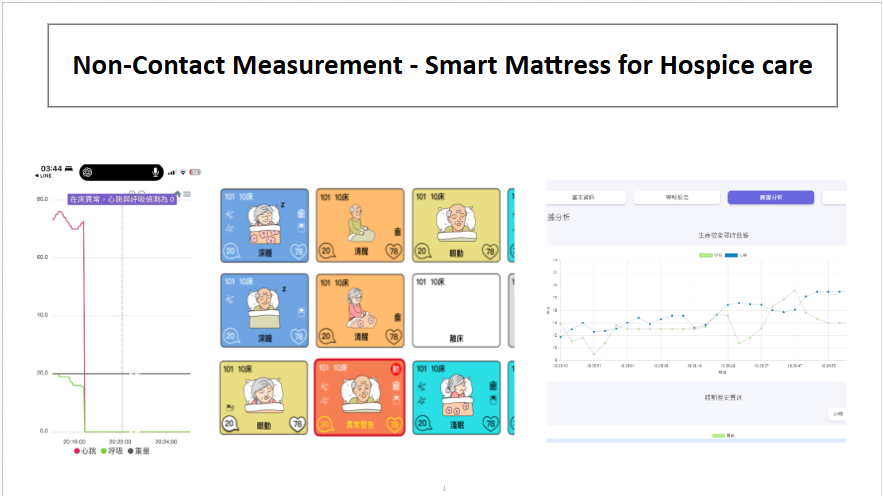
To address privacy and latency concerns, the system relies heavily on edge computing. By processing data locally rather than routing it through cloud servers, the facility achieves near-instant response times while reducing external data exposure—an important consideration for families evaluating continuous monitoring environments.
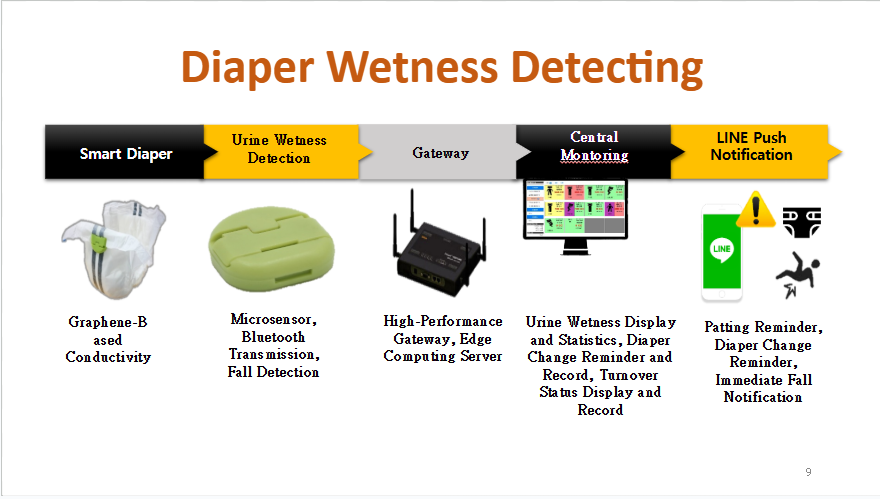
3. Care Assistance: Supporting Function, Comfort, and Dignity
Care assistance technologies focus on preserving autonomy and reducing avoidable discomfort. Graphene-based moisture sensors embedded in absorbent products notify caregivers when changes are needed, helping prevent incontinence-associated dermatitis.
Portable bladder scanners measure post-void residual volume, supporting more informed catheterization decisions and, in many cases, avoiding catheter use altogether. In rehabilitation settings, neuromuscular electrical stimulation combined with dysphagia therapy protocols has, in selected cases under clinical supervision, supported improvements in swallowing function, reducing long-term dependence on feeding tubes.
Across these interventions, the underlying objective remains consistent: maintaining functional independence while respecting personal dignity.
Integrating Information Across Care Teams and Families
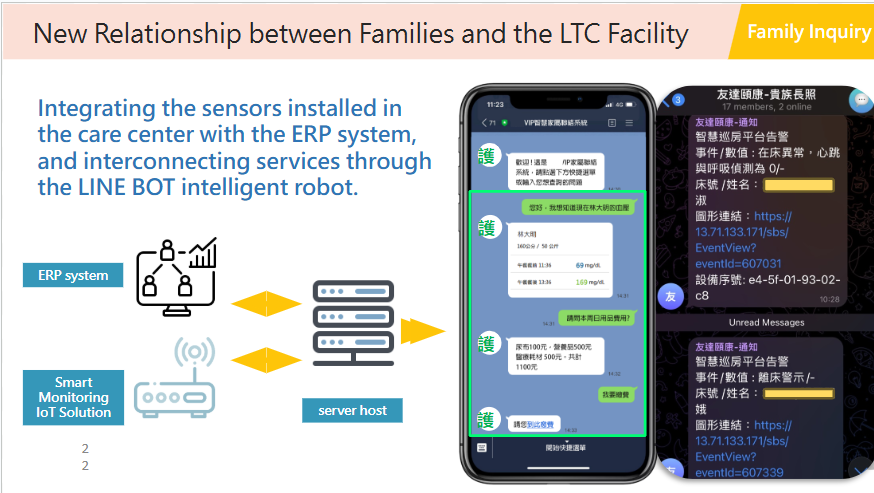
A defining feature of the system is data integration. Sensor outputs are consolidated into the facility’s ERP platform and shared with families through secure messaging tools. Family members can view daily activity summaries, medication schedules, and selected health indicators, reducing information gaps and building trust.
For caregivers, documentation workflows are streamlined through mobile applications and voice-based input, lowering administrative burden and reducing errors. This bidirectional information flow allows care teams and families to remain aligned without increasing workload.
Barriers to Sector-Wide Adoption
Despite years of iterative deployment, Sang acknowledges that scaling smart care systems across the long-term care sector remains challenging.
Cost remains the most significant obstacle. Comprehensive sensor networks and AI-enabled infrastructure require substantial upfront investment. While public subsidies exist, they typically offset only part of total equipment costs, leaving smaller facilities with difficult capital decisions.
Interoperability continues to affect trust and usability. Proprietary data formats limit integration across device ecosystems, and excessive false alerts can erode caregiver confidence over time. “Adoption depends on whether staff trust what the system is telling them,” Sang notes.
Ethical governance is still evolving. Continuous monitoring raises consent and autonomy questions, particularly for residents with advanced cognitive impairment who cannot easily express preferences about surveillance in personal living spaces.

From Isolated Tools to Care Partners
For Sang, the value of technology lies not in technical sophistication but in its impact on care delivery. Unlocking that value requires alignment across policy frameworks, regulatory guidance, and workforce training—allowing AI systems to evolve from standalone tools into integrated partners that synthesize data, surface risks early, and support timely intervention.
As long-term care systems globally confront staffing shortages and rising care complexity, the experience at Taipei Noble Healthcare Center offers a practical example of how intelligent infrastructure can be embedded into everyday care—augmenting clinical and caregiving judgment without displacing human decision-making.
Coming Up Next
In the coming weeks, we will continue to publish insights from ACIF 2025 speakers and international buyers visiting Cares Expo Taipei 2025, sharing their analyses and perspectives on how different countries are responding to the evolving trends in the aging society and care industry.
Through their experiences, we aim to offer readers a broader perspective on how global collaboration and innovation are shaping the next decade of the healthcare industry.
🚀 Connect with Global Leaders in Aging & Care Innovation!
Sourcingcares links international partners in aging care, long-term care, and health technology, fostering collaboration and driving solutions for a changing world. Our initiatives include Cares Expo Taipei, where the future of elder care takes shape!
🔗 Follow us for insights & opportunities:
📌 Facebook: sourcingcares
📌 LinkedIn: sourcingcares
📍 Explore more at Cares Expo Taipei!
