
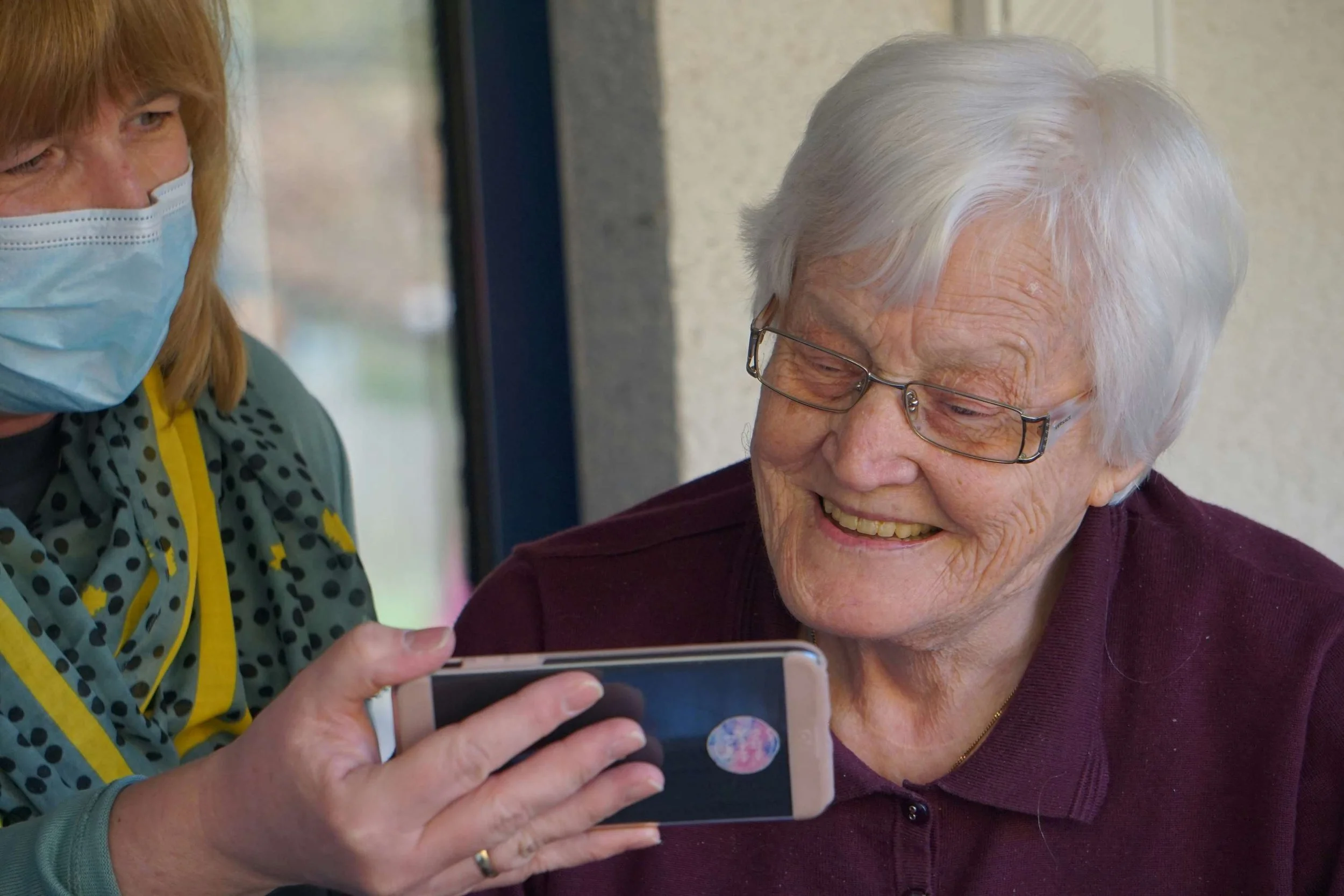
(Photo by Georg Pflueger on Unsplash)
Europe is heading toward a substantial increase in long-term care demand at home over the next five decades, driven by rapid growth in the oldest population and declining availability of family support. A new European Commission study highlights the need to expand professional home-care services, strengthen the care workforce and make ageing in place more sustainable.
The report, “EU-wide Projections for Long-Term Care Demand at Home,” published by the European Commission’s Joint Research Centre (JRC) in October 2026, projects that the share of people aged 50 and over requiring long-term care will increase from 19.4% in 2025 to 25.6% by 2075, assuming age-specific care needs remain unchanged.
The population aged 90 and above is expected to more than triple over the same period. This group will be particularly important to future care planning, as people in this age bracket have the highest likelihood of requiring long-term care.
Family Support Declines, Professional Care Needs Increase
Population ageing is not the only factor behind rising demand. Changes in household composition are also expected to place greater pressure on formal care services.
As more older people live alone or without a partner or adult children in the household, fewer may have relatives available to provide regular unpaid assistance. This could increase reliance on paid home-care workers, nurses and other community-based professionals.
The JRC's projections suggest that healthy ageing could moderate future demand, but it is unlikely to reverse the overall increase. Expanding the formal care workforce will therefore be essential to maintaining access to home-based support.
The demand will extend beyond basic personal assistance. Older people may require help with bathing, dressing, meals and medication, as well as nursing care, rehabilitation, dementia support, mobility assistance and household services. Care coordinators and remote-monitoring solutions could also play a growing role in managing complex needs at home.
Ageing in Place Remains a Strong Preference
Evidence from Finland suggests that many people aged 90 and above still prefer to remain in their own homes rather than move into residential care.
A 2025 study of 1,834 people aged 90 and older in one Finnish region found that, among those still living in the community, 71% preferred to remain at home with their existing level of assistance. Another 18% wanted to stay home with additional help, while 11% preferred moving to a residential care facility.
The findings indicate that many very old adults value familiar surroundings, established routines, and independence. Importantly, some may need more assistance rather than a change in their living arrangements. However, preferences vary with health and functional ability, and residential care remains necessary for people whose needs cannot be safely met at home.
Implications for Care Providers and Technology Companies
The projected demand creates opportunities for home-care operators, nursing providers, rehabilitation services, and technology developers. Services that combine personal care, skilled nursing, dementia support, and rehabilitation could become increasingly important.
Technology may help address workforce constraints through fall detection, remote monitoring, emergency alerts, and connected care platforms. However, these solutions will complement rather than replace hands-on care.
For policymakers and operators, the challenge is to build a flexible care system that supports older people at home for as long as appropriate while ensuring access to residential care when required.
The long-term opportunity lies not simply in expanding home-care services, but in making ageing in place a safe, reliable, and professionally supported option for Europe's growing oldest-old population.
🚀 Connect with Global Leaders in Aging & Care Innovation!
Sourcingcares links international partners in aging care, long-term care, and health technology, fostering collaboration and driving solutions for a changing world. Our initiatives include Cares Expo Taipei, where the future of elder care takes shape!
🔗 Follow us for insights & opportunities:
📌 Facebook: sourcingcares
📌 LinkedIn: sourcingcares
📍 Explore more at Cares Expo Taipei!
