
Consumer Technology Association Sets First-Ever Performance Benchmarks for Fall Detection
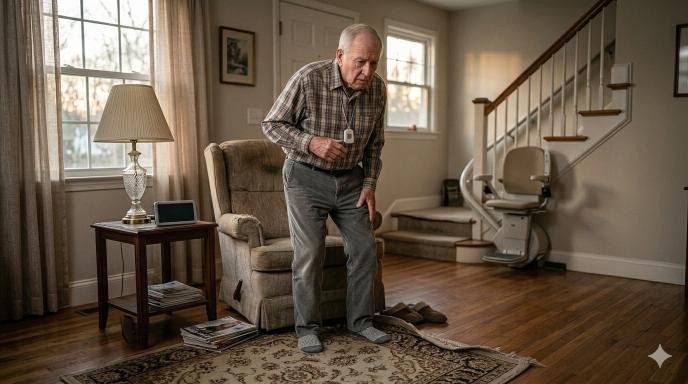
The Consumer Technology Association’s (CTA) Health, Fitness and Wellness Committee (R11) has recently launched a project to develop a standard, CTA-2142, Use Cases, Applications, and Performance Requirements for Fall Detection Digital Health Technologies.
In a move set to transform the landscape of senior safety and digital health, the Consumer Technology Association (CTA) has officially launched CTA-2142. This new standards project establishes a rigorous industry framework for fall detection technologies, aiming to provide consistency in a market that has long been a "Wild West" of varying performance claims.
As one in four older adults in the United States falls each year—with more than half of those incidents occurring at home—the stakes for reliable technology have never been higher.
What is the CTA-2142 Standard?
The CTA-2142 initiative, titled “Use Cases, Applications, and Performance Requirements for Fall Detection Digital Health Technologies,” is designed for everyday, non-clinical use. Its primary goal is to move beyond the marketing jargon and establish clear, measurable benchmarks for how these devices should perform in the real world.
Key Focus Areas of CTA-2142:
Universal Definitions: Establishing a common language for what constitutes a "fall" across different devices.
Performance Thresholds: Setting minimum expectations for accuracy and reliability.
Testing Methodologies: Creating standardized ways to test devices in common fall-related scenarios.
Reporting Requirements: Ensuring manufacturers provide transparent data to consumers and healthcare integrators.
By creating these guardrails, the CTA hopes to foster innovation in non-invasive technologies, such as radar-based sensors and AI-driven analytics, which can detect motion without the privacy concerns associated with traditional camera-based systems.
Consumer Guide: What to Look for When Buying
While the CTA-2142 standard will help regulate the industry, end-users still face a dizzying array of choices. Based on recent market testing and the new standards, here are the critical criteria consumers should evaluate before purchasing a medical alert system with fall detection.
1. Fall Detection Accuracy and Placement
Not all sensors are created equal. Research suggests that devices worn on the chest (pendant) or waist tend to be more accurate (up to 98%) than those worn on the wrist.
Tip: Wrist-worn devices are often prone to "false alarms" caused by natural arm movements, like clapping or reaching for a shelf.
2. Response Time
In the event of a fall, every second counts. Industry experts suggest looking for a system with an average response time of under 90 seconds. Top-tier providers currently clock in at impressive averages of 52 and 48 seconds, respectively.
3. Reliable GPS Tracking
If you plan to use your device outside the home, GPS is non-negotiable. Ensure the device can provide a specific street address rather than just a general vicinity. This is vital if a fall occurs in a park or a large parking lot where you might be difficult to spot.
4. Battery Life and Charging
A safety device is useless if the battery is dead.
On-the-go devices: Range from 24 hours to 10 days
At-home systems: Usually rely on a plugged-in base station with a backup battery.
5. Transparency of Costs
The "sticker price" is rarely the final cost. For the US residents, be sure to calculate the total monthly investment, which typically includes:
Base Subscription: US$20–$50/month.
Fall Detection Add-on: Usually an extra US$5–$11/month.
Hidden Fees: Look out for activation fees (up to US$200) or equipment costs.
The Path Forward
The introduction of CTA-2142 marks a turning point for "aging in place." As technology becomes more sophisticated and standardized, these systems will offer more than just a safety net—they will provide the peace of mind necessary for seniors to maintain an active, independent lifestyle.
🚀 Connect with Global Leaders in Aging & Care Innovation!
Sourcingcares links international partners in aging care, long-term care, and health technology, fostering collaboration and driving solutions for a changing world. Our initiatives include Cares Expo Taipei, where the future of elder care takes shape!
🔗 Follow us for insights & opportunities:
📌 Facebook: sourcingcares
📌 LinkedIn: sourcingcares
📍 Explore more at Cares Expo Taipei!
