
California Prisons’ VR “Hope Machines” Point to a New Frontier for Long-Term Care
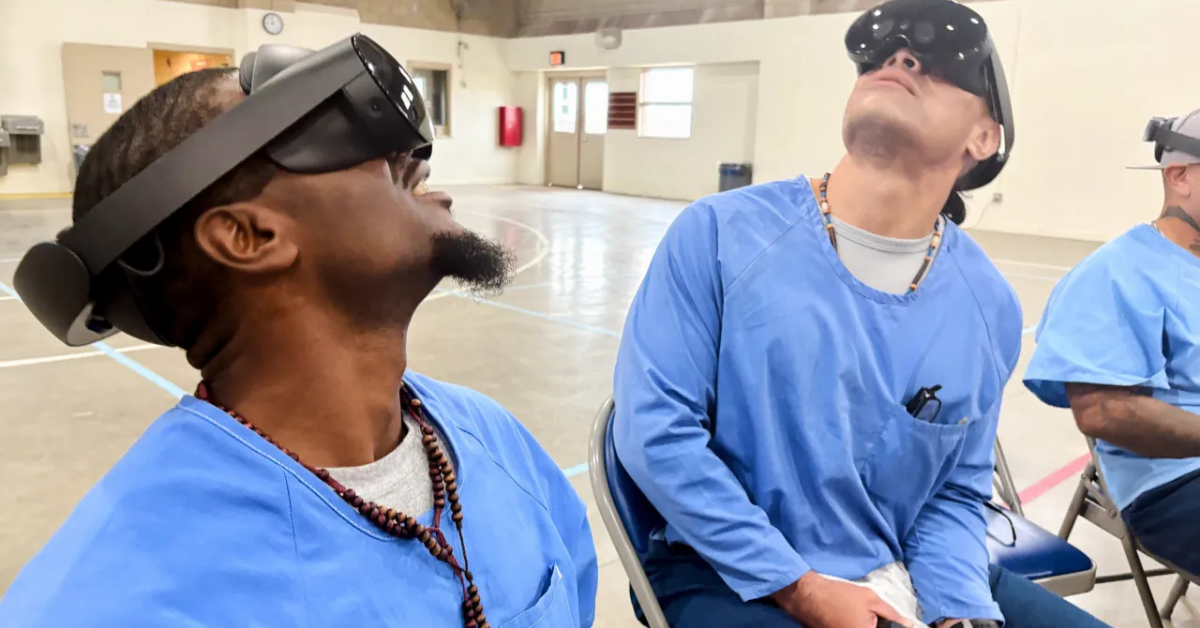
A virtual reality program that cut disciplinary incidents by 96% inside California prisons is now offering an unexpected blueprint for how long-term care providers could address isolation, behavioral health, and quality-of-life challenges at scale. (Source: ABC News)
A 96% reduction in disciplinary incidents inside California prisons is drawing attention far beyond the correctional system—highlighting virtual reality’s emerging role in behavioral health, eldercare, and long-term care delivery.
From Incarceration to Care Infrastructure
Four California state prisons have quietly become unlikely testbeds for a technology with growing relevance to the global care economy. Through a rehabilitation initiative run by nonprofit Creative Acts, 100 Meta Oculus headsets were deployed across Corcoran State Prison, Central California Women’s Facility, Valley State Prison, and California Men’s Colony. Within a year, participating facilities reported a 96% decline in disciplinary incidents, with one high-security unit recording a drop from 735 violations to just one over three months.
While designed for inmate rehabilitation, the outcomes underscore a broader question now gaining traction among care providers:
Can immersive technology address the psychological effects of long-term isolation—regardless of whether it occurs in prisons or long-term care institutions?
Participants used VR to rehearse job interviews, navigate self-checkout systems, withdraw cash from ATMs, and experience everyday social settings that had evolved during decades of incarceration. Others explored virtual environments ranging from Paris to Thailand. Program facilitators report strong emotional responses, particularly among individuals incarcerated for 20 years or more, many of whom described the experience as their first reconnection with the outside world.
Why the Long-Term Care Sector Is Paying Attention
The parallels with eldercare and long-term care settings are increasingly difficult to ignore. Residents in nursing homes and assisted living facilities often experience prolonged social isolation, loss of autonomy, anxiety related to unfamiliar technology, and the psychological strain of institutional life—conditions closely mirrored in correctional environments.
Early applications suggest VR could address several persistent challenges in long-term care:
Behavioural and Emotional Regulation
Exposure to calming virtual environments—natural landscapes, familiar neighbourhoods, or culturally meaningful settings—has been shown to reduce agitation and stress in prison populations. Similar outcomes are being reported in dementia and behavioural health programs within eldercare facilities.
Cognitive Engagement and Memory Support
VR enables residents to revisit childhood homes, attend virtual family gatherings, or experience familiar social rituals, supporting reminiscence therapy and reducing symptoms of confusion and withdrawal.
Social Connection at Scale
Technologies initially developed to maintain inmate-family connections offer a model for addressing isolation in long-term care facilities, particularly where staffing shortages limit in-person engagement.
Non-Pharmacological Behavioural Health Interventions
VR-based therapy protocols used for trauma, anxiety, and addiction in correctional settings are increasingly relevant as care providers seek alternatives to medication-heavy behavioural management in eldercare.
Market Implications for Care Technology
The global long-term care market surpassed $1 trillion in 2023, with dementia care and behavioural health representing some of its fastest-growing segments. VR care technology targets several structural pressures facing providers:
Staffing Shortages
With persistent workforce gaps across healthcare systems, VR offers a way to extend caregiver capacity rather than replace it—supporting mental stimulation, emotional regulation, and guided therapy at scale.
Cost Containment
Research from the U.S. Department of Education indicates that each dollar invested in rehabilitation programs can save up to five dollars in downstream costs. Comparable dynamics are emerging in eldercare, where reduced behavioural incidents translate into fewer emergency interventions and lower medication use.
Quality-of-Life Metrics
California’s Department of Corrections and Rehabilitation cited VR’s ability to “heal trauma and regulate emotional response”—outcomes increasingly prioritized by long-term care operators under value-based care models.
Global Signals of Adoption
International programs reinforce VR’s scalability across care systems. European initiatives such as the ViRTI project (Portugal, France, Spain) and Finland’s IMAGINE Project have reported measurable reductions in aggression and improvements in emotional regulation. Romania’s VR4React program was recognized as a leading innovation in 2025.
At the multilateral level, the United Nations has commissioned research into VR-based rehabilitation across correctional systems in the U.S., Europe, Asia-Pacific, and Latin America, with pilot programs scheduled for 2026. These frameworks are expected to influence eldercare and social care applications globally.
🚀 Connect with Global Leaders in Aging & Care Innovation!
Sourcingcares links international partners in aging care, long-term care, and health technology, fostering collaboration and driving solutions for a changing world. Our initiatives include Cares Expo Taipei, where the future of elder care takes shape!
🔗 Follow us for insights & opportunities:
📌 Facebook: sourcingcares
📌 LinkedIn: sourcingcares
📍 Explore more at Cares Expo Taipei!
Source: ABC News
